Taking the long view means choosing future benefits over short-term payoffs. At Longview Farms that means we are committed to:
innovative, sustainable farming methods to build the soil to produce healthy pasture without the use of pesticides and chemical fertilizers.
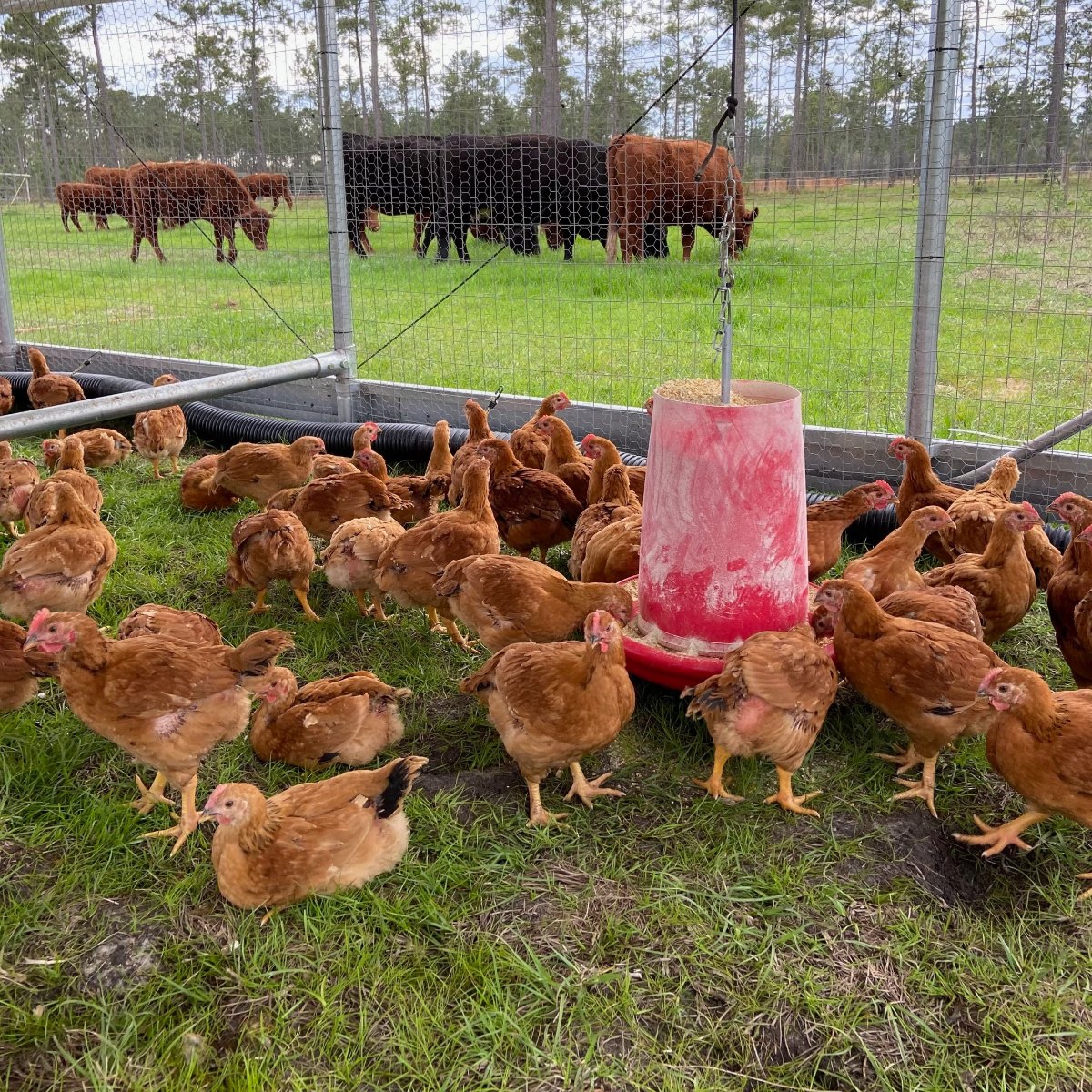
healthy beef cattle and chickens on pasture by employing rotational grazing and following standards of the American Grassfed Association.
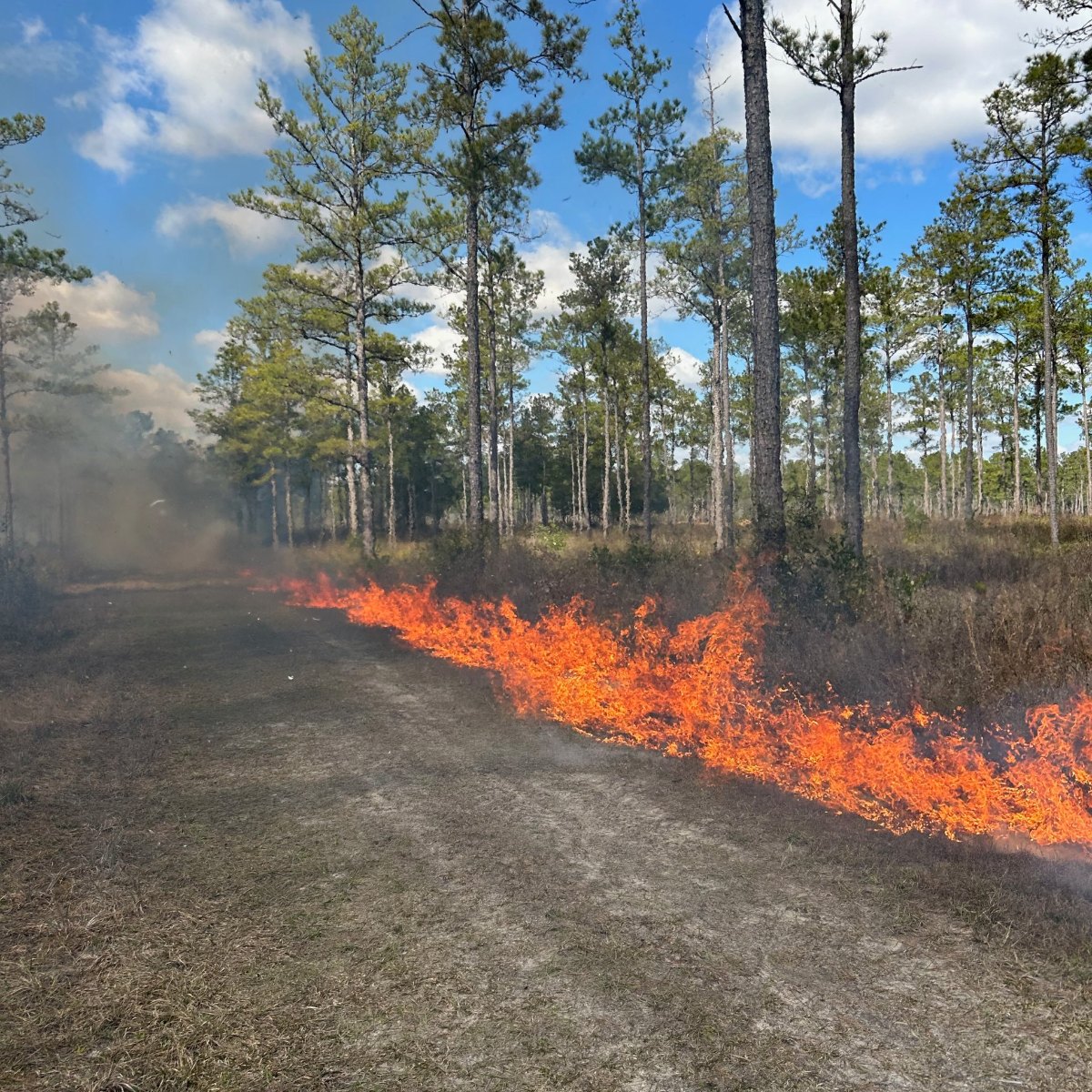
our longleaf pine ecosystem through fire ecology, selective thinning, and annual replanting.
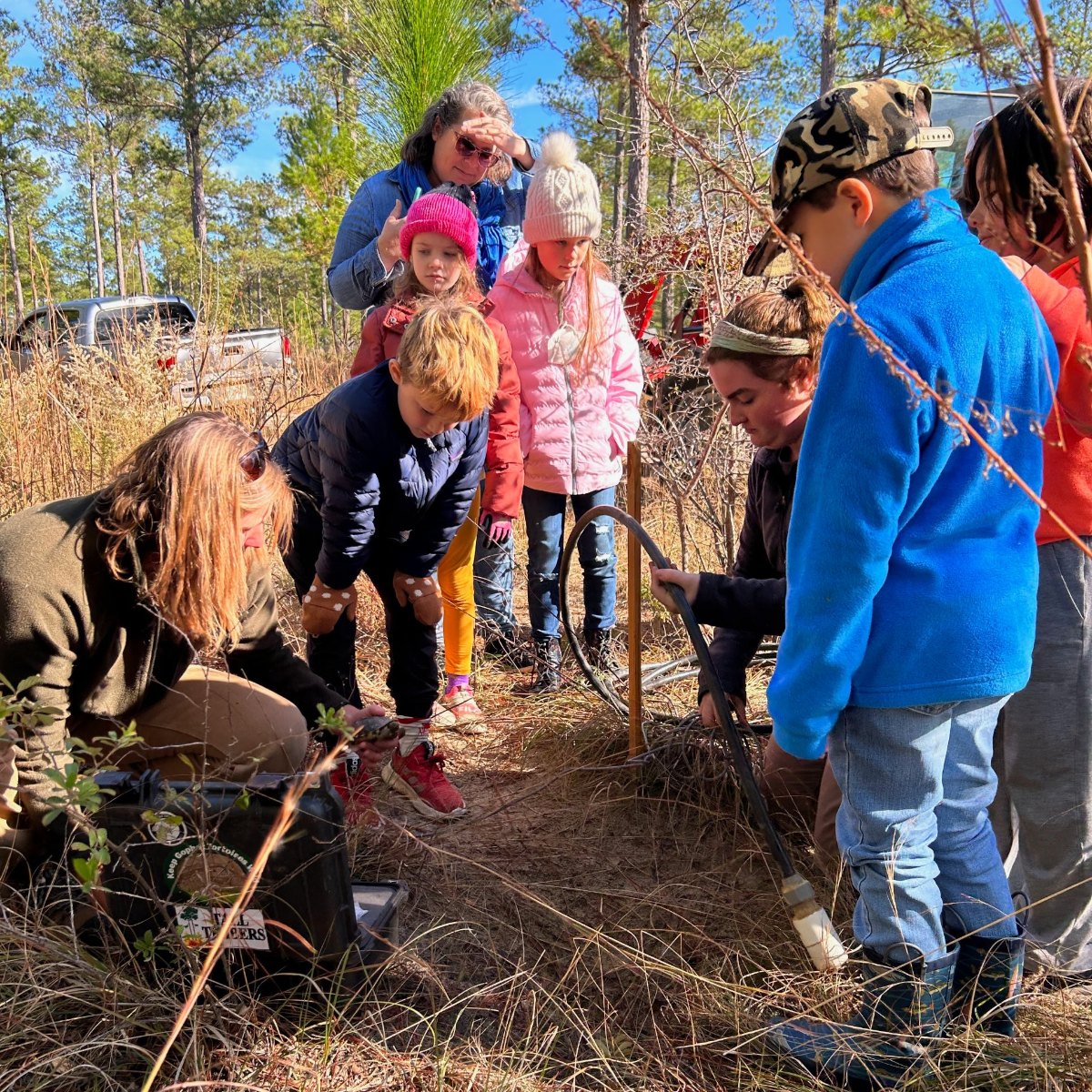
the farm as an outdoor classroom to immerse students in nature and to model sustainable farming and land management practices.
Taking the long view means choosing future benefits over short-term payoffs. At Longview Farms that means we are committed to:
By choosing the “long view” of farming, we look for ways to make nature and agriculture work together even when that means waiting longer for results. The animals we raise will only be as healthy as the soil where they graze. At the same time, the animals on our farm are essential to improving the soil’s vitality and resilience. So in our pastures, you’ll see cows, chickens, and horses “fertilizing” the soil, aerating it with their hooves and beaks, and stimulating the growth of grasses and legumes. In gratitude, the soil grows richer each year with higher organic content and gives the animals more delicious and nutritious pastures.
Our pastures are divided into 4 acre paddocks so the cows eat more of the grass and fertilize the area more completely. Then, after they have eaten the top third of the grass down (usually after one or two days), they are moved to the next paddock of fresh grass.
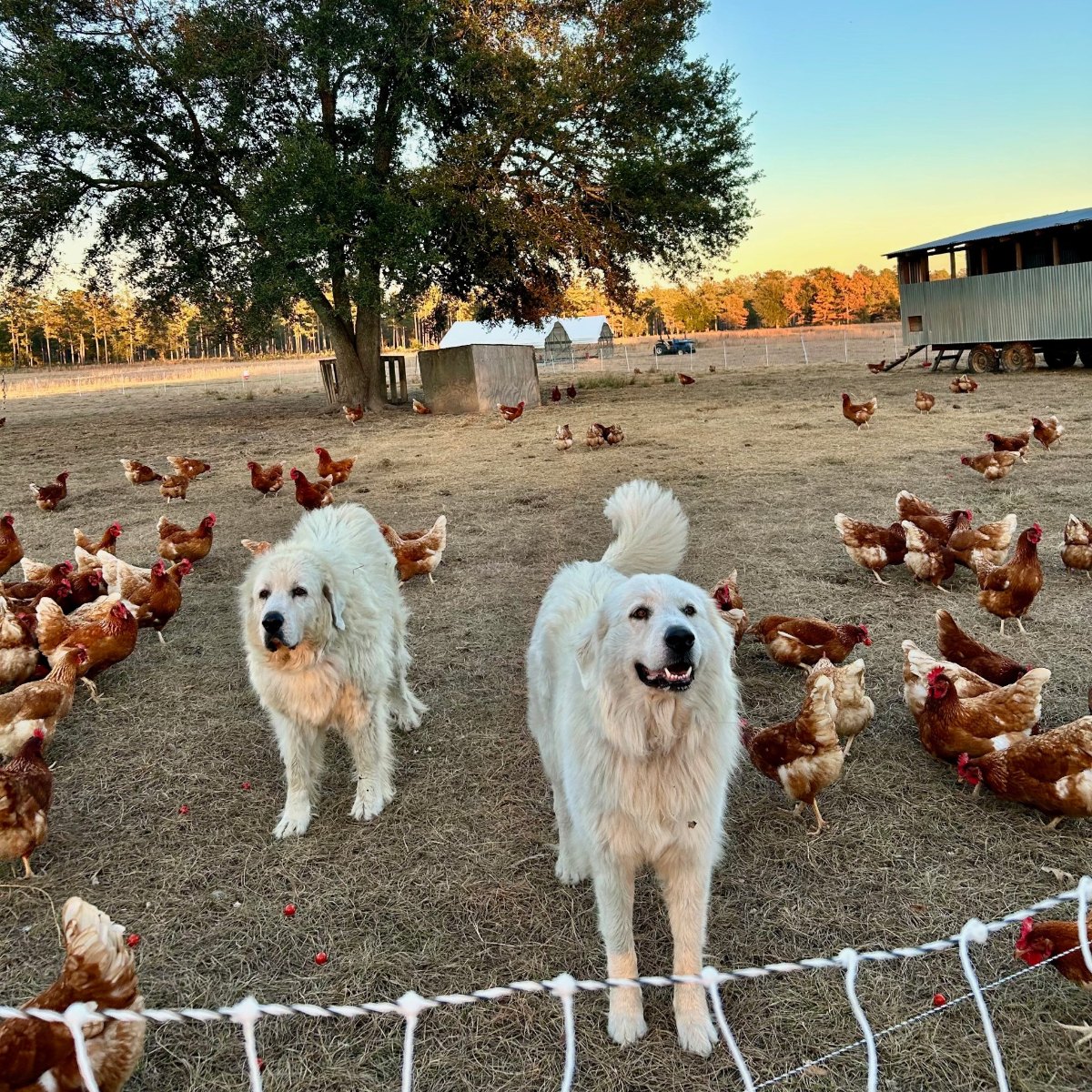
Our goal is to keep the cows moving so they eat the most nutritious part of the grass and then the grass is given 20 to 30 days to recover. In some of our pastures, we have our chickens, both layers and broilers, follow the cows. The chickens happily scratch through the cow patties, spreading the fertility and reducing the chances of parasites developing in the pasture.
We don’t use any artificial fertilizers or herbicides in our pastures. Instead, we rely on rotating cows and chickens to add fertility and life to the soil. Livestock on pastures have doubled or tripled the soil organic matter in our pastures, and as a result they retain thousands of gallons more of rainwater. With the improved fertility we have also seen a growing diversity of plants in the pasture, and we add diversity through planting winter and summer cover crops. These seed mixes, depending on the season, include cereal rye, red and white clover, turnips, oats, triticale, hairy vetch, and more.
Cows aren’t equipped for processing a grain based diet. They do it of course, and they can sure pack on the pounds when they are confined to a feedlot and fed corn, but we believe they are much healthier and happier when they spend their days eating grasses and legumes in healthy pastures. We follow the American Grassfed Association guidelines and do not supplement with any grain. Our Devon and cross-bred cows are grass fed from start to finish. Our chickens love eating insects and grass in the pasture, but most of their nutrition comes from a high quality, non-GMO feed from Kalmbach Feed.
Before we started raising animals, we focused on restoring the pine ecosystem that dominates our land. With selective thinning and controlled burns, our pine woods grew healthier trees, native grasses returned, and our wildlife population grew.
Those forests taught us about the importance of building on the vitality that already exists in nature. Keeping trees in our pasture (silvopasture) to provide shade for the animals also helps hold moisture in the soil and reduces erosion. Disturbing the soil as little as possible allows the unseen food web below the surface to continually build healthy soil.
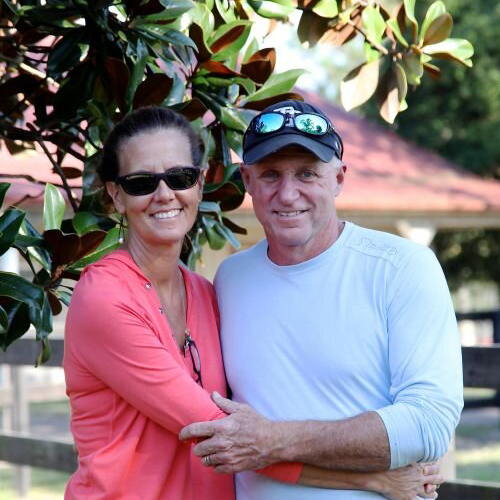
Betsey and Tony are the owners of Longview Farms. They share the day-to-day management of the pastured poultry and grassfed beef operations. Betsey also leads the baking of our sourdough bread.
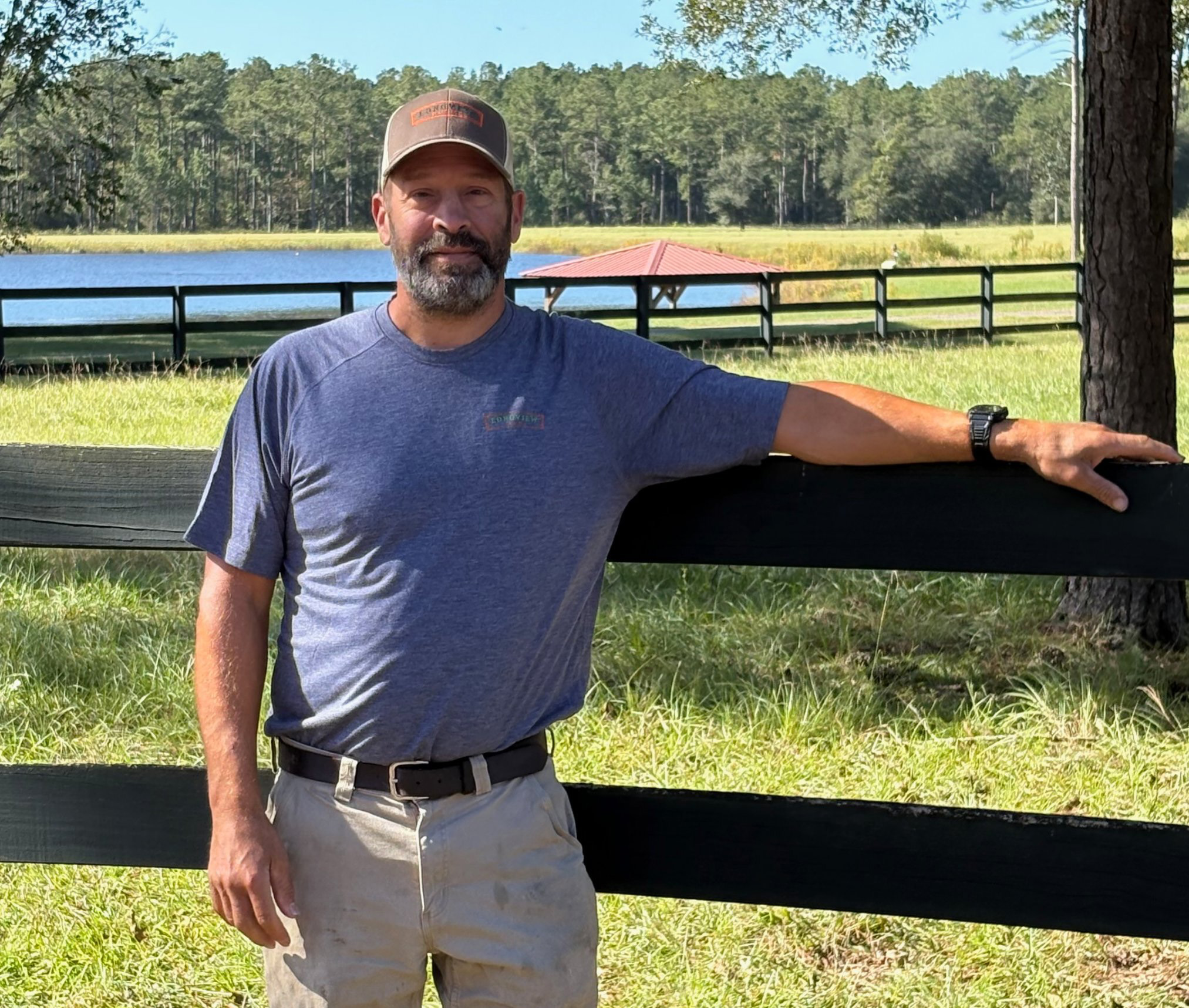
Jimmy Littler is our farm foreman. Jimmy has a broad job description: feeding and caring for livestock, servicing equipment and tractors, assisting with chicken processing, and maintaining our grounds, infrastructure, and pastures. He also plants wildlife plots and assists with the prescribed burning of our woods. His many years of experience with livestock, tractor work, landscaping, and carpentry make him an invaluable member of our team.
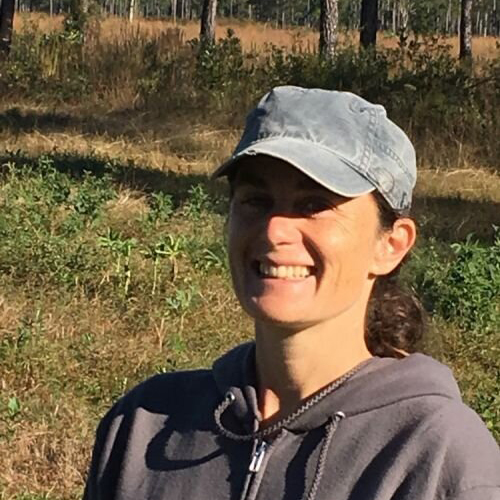
Sky Feller is our education specialist. She has a Masters Degree in Botany and extensive training in science education. Sky creates developmentally-appropriate curriculums for school groups who visit the farm, coordinates with teachers whose classes will visit the farm, and leads the farm trips. When Sky is not leading field trips, she assists Betsey in baking our sourdough bread.